• Home
  • Blog
DANGEROUS TIMES
  • Home
  • Blog

6/28/23

6/28/2023

3 Comments


REJOICE!
THE SUPREME COURT MIGHT HAVE DONE ANOTHER TERRIBLE THING. IT DIDN’T

Picture
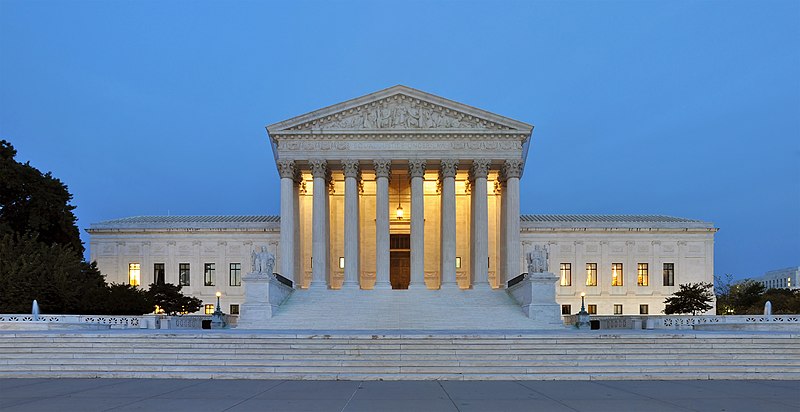
THIS US SUPREME COURT at twilight in 2011. CREDIT: Joe Ravi, Creative Commons license CC-BY-SA 3.0,
IT COULD TURN OUT THAT Tuesday, June 27, was the happiest day of the year.
   That was the day that a political disaster that imperiled democracy didn’t happen.
   The U.S. Supreme Court – more commonly, “The Bonkers Court”  - decisively rejected a right-wing theory that could have destroyed the country’s elections.
   The concept is known as the “independent state legislature theory,” which says that a preposterous misreading of the U.S. Constitution gives state legislatures virtual exclusive control over how elections are handled, with no other branch of state government – including courts – allowed a say.
   At it’s worst, it means that a state legislature can create its own slate of electors to choose presidents, one of the ploys that Trump and his insurrectionist cronies tried to use to install Trump in  a second term, overriding Joe Biden’s decisive victory in 2020.
   Against many people’s expectations, the Supreme Court, in a 6 to 3 decision, said nothing doing.
   You could hear a sigh of relief sweep across the nation.  The New York Times announced the decision with this giant headline:

   SUPREME COURT REJECTS THEORY THAT WOULD
   HAVE TRANSFORMED AMERICAN ELECTIONS

   Just how frightened people were by the chance that the Supreme Court would rule the other way was this statement by retired federal appeals court judge Michael Luttig, a conservative, according to the Associated Press:
   “This is the single most important case on American democracy – and for American democracy – in the nation’s history.”


HERE'S HOW THE WACKO THEORY WORKS.  It’s based on an absurd reading of Article 1, Section 4, of the Constitution. The text:
“The Times, Places and Manner of holding Elections for Senators and Representatives, shall be prescribed in each State by the Legislature thereof; but the Congress may at any time by Law make or alter such regulations, except as to the Places of chusing Senators.”
   The operative word here is “Legislature” (and you thought it was “chusing”).
   Republican right-wingers contend that because the clause doesn’t mention any other unit of state government than the “Legislature thereof,” that the legislature thereof has exclusive power to dictate the terms of an election.
   Which ignores how American government – and its system of checks and balances between the competing legislative, court and executive branches – actually works.
   Common sense says baloney, but in recent years, the Supreme Court and its right-wing majority, has been feasting on a deadly diet of unhealthy thoughts, the most important example being its decision overturning the half-century right to abortion.
   So, there was good reason to be terrified that the court would do something similar in  a North Carolina case about gerrymandering voting districts.
   The possibility of a frightening outcome hung over the nation for a year. But it didn’t happen.
   Here’s how Chief Justice John G. Roberts Jr. wrote the decision:
   “We are asked to decide whether the Elections Clause carves out an exception to this basic principle (courts’ authority to weigh in on legislative actions). We hold that it does not. The Elections Clause does not insulate state legislatures from the ordinary exercise of state judicial review.”
   When you think about it, asking the highest court in the land to rule that any courts, including state courts, don’t have the power to rule on any aspect of law, is absurd.   
   The last thing a court is likely to do is hand over its authority to another branch of government. “That’s right, folks, we’re irrelevant.”

   Still, three of the nine justices voted the wrong way: Justices Clarence Thomas, Samuel A. Alito Jr. and Neil M. Gorsuch.


INCIDENTALLY, in the arcane way judges use historical references to support their rulings, the Roberts’ decision mentions my state of Rhode Island – twice:

  “Although judicial review emerged cautiously, it matured throughout the founding era. These state court decisions provided a model for James Madison, Alexander Hamilton, and others who would later defend the principle of judicial review.
   In the 1786 case Trevett v. Weeden, for example, lawyer James Varnum challenged a Rhode Island statute on the ground that it failed to provide the right to a jury trial. Although Rhode Island lacked a written constitution, Varnum argued that the State nevertheless had a constitution reflecting the basic historical rights of the English.  
   And, he contended, the courts must honor ‘the principles of the constitution in preference to any acts of the General Assembly.’ Varnum won, to the dismay of the State’s legislature, which replaced four of the five judges involved…

   “…The Framers recognized state decisions exercising judicial review at the Constitutional Convention of 1787. On July 17, James Madison spoke in favor of a federal council of revision that could negate laws passed by the States. He lauded the Rhode Island judges ‘who refused to execute an unconstitutional law,’ lamenting that the state’s legislature then ‘displaced’ them to substitute others ‘who would be willing instruments of the wicked & arbitrary plans of their masters.’ “
  
  
I mention this because Rhode Island is the best place on earth to live, despite its often-ridiculed status as the tiniest state in terms of land-mass, its well-deserved reputation for public corruption and its always struggling economy.
   Anything that gives Rhode Island a pat on the back, even by a conservative Supreme Court chief justice, is appreciated.


AS I'M WRITING THIS -  the day after the decision was announced – the case of Moore v. Harper – has virtually vanished from the major news websites.
   This is understandable.
   There’s not much staying power for a story about something that didn’t happen.
  The bomb didn’t go off. The assassination conspiracy was averted. The sprinkler system worked. The Klondike bar didn’t melt.
   And there are plenty of nightmares ahead. Donald Trump is polling ahead or nearly equal to Joe Biden. (This is impossible to comprehend). The Supreme Court has two more days in this session to issue awful decisions on remaining cases. Millions of  Americans are trying to survive a terrible heat wave.
   But there’s lasting  joy in this tiny slice of the American seashore, a state whose slogan is “Hope,” and the excitement is going to stay with me next week, through Independence Day next month, and into Rhode Island’s unique Victory Day holiday (the second Monday of August, marking the end of World War II), and through Christmas and New Year’s Day and maybe for months beyond.
    A terrible thing might have happened.
   And it didn’t.


3 Comments

6/14/2023

6/14/2023

1 Comment


The Watergate Effect
BACK IN COURT, TRUMP
REMAINS A MENACE

Picture
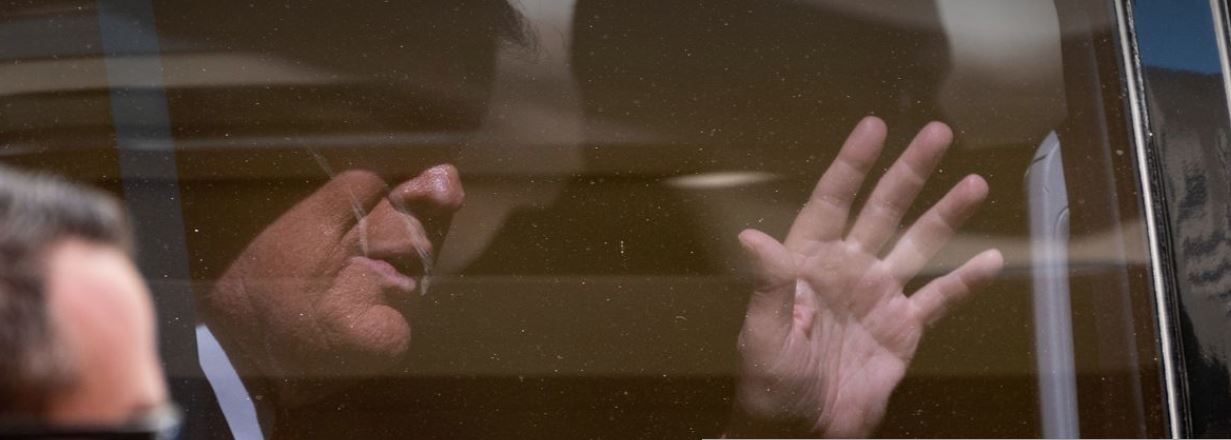
TRUMP leaving the courthouse. CREDIT: Will Lanzoni, CNN
IT WAS  ASTONISHING. IT WAS BORING.
    It was historic. It was mundane.
  Donald Trump’s appearance yesterday in federal court on charges that he arrogantly, carelessly, illegally stashed national security documents at his grotesque Florida estate was both unsettling and anticlimactic.
   In any case, it surely wasn’t fun.
   It might have been a hoot back in the days when he was first elected and feeling his way through the opening moments of his administration, when people used to fantasize about men and women with FBI stenciled on their jackets leading him out of the White House in handcuffs.
   But too much has happened.
   Donald J. Trump has done too many bad things, and justice has been too elusive.
   It feels he has escaped too many times before, during and after his presidency, to give us any confidence that he will  really face the consequences of his treachery.
   Twice indicted; twice acquitted.
   The Mueller Report, while it wasn’t the hall pass that many people believe, did not prove that Trump was (and is) Vladimir Putin’s puppet.
   A civil jury in the E. Jean Carroll case did find that Trump sexually abused the writer and that he defamed her, but weirdly failed to find for Carroll on the most serious charge of rape.
   Also, Tuesday’s event, felt too familiar, given that that weeks ago, Trump made a similar appearance in New York City, where he was charged with falsifying financial documents to hide an alleged sexual liaison with Stormy Daniels.
   The Big Apple spectacle had been more dramatic because it was actually the first time the ex-president was forced into a courthouse, and because the photo-ops were better, with pictures of a scowling Trump at the defense table.
   The Miami appearance – although the first time Trump was charged with federal crimes – was less photogenic, given the federal court’s ban on cameras inside and outside the courtroom.
   There had been some worries that protests outside the courthouse would get out of hand, Jan. 6 style, but thankfully that didn't live up to the advance hype. Trump himself was nearly invisible. A CNN photo showed a ghostly shadow of him being driven away from the courthouse, hand pressed against a car window.


AND YET . . .
   The Miami charges are many times more serious than those in New York, and represent a Full Trump assault on responsible, serious stewardship we expect of actual public servants.
   So we should celebrate the fact that the law was being applied to an ex-president and that maybe, just maybe that it's not a lie that no person is above the law.
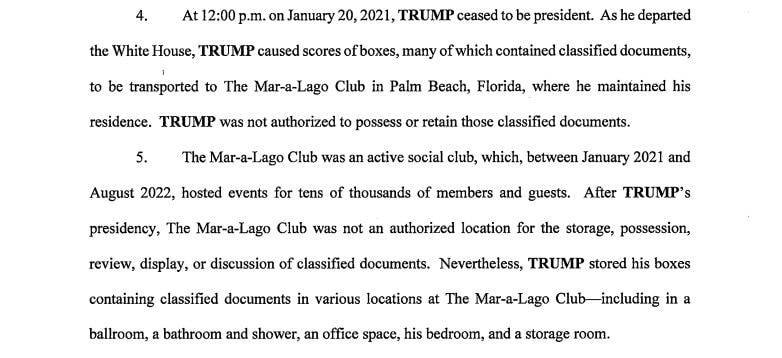
   Also, unlike many legal documents, the 49-page indictment is written with the clarity and detail of a newspaper or magazine story, while seething  with convincing examples of Trump’s trickery, lies and abuse of power, along with unstated implications of sedition and treason.

Picture
 
   The indictment describes Trump and his co-conspirator, “Walt” Nauta – Trump’s “body man” and valet – playing keep-away with boxes containing national secrets, moving them around the Florida estate to hide them from his own lawyer, as well as the FBI.
   There are almost hilarious photos of boxes piled up on a ballroom stage, in a bathroom and other non-secure areas of Mar-a-Lago, one picture showing that in one room, boxes had fallen, scattering their contents on the floor.  

Picture
Picture
    Still, in today’s hyper-news environment, the eloquent, damning  indictment was by now old news.
   Republicans, as usual, were loudly deflecting attention away from the Trump charges by complaining of an unfair political prosecution, inappropriately evidenced by comparisons to the ancient Hillary Clinton email controversy and more recent discovery of government papers in the garage where Joe Biden keeps his Corvette.
   The charges against Trump should have produced consensus that, if proven, Trump had done a bad thing, and the fact there is no consensus and it seems there never will be one is depressing.


THERE ARE OTHER REASONS why Tuesday wasn’t any fun.
   The fear that there’s plenty of room for mischief in the Florida case, and that Trump will wriggle free. Maybe because the Trump-favoring U.S. District Court judge, Aillen M. Cannon,  is presiding and is likely to make decisions that will unfairly help the defendant. Or that just one juror from Trump-loving Florida will tank the case; or, the ultimate horror, that Trump will win a second term as president and scuttle that and any other case against him.
   It’s a disappointment, too, that Trump still hasn’t been indicted with the most serious felonies of his presidency, his multi-front attempt to cheat his way into a second term by overturning the Biden election, culminating in the Jan. 6 Capitol riot.


I THINK ALSO that I’m not alone in being exhausted by Trump the man and Trump the outlaw and his attack on democracy. Nothing seems to change. Nothing seems to slow Trump, politically. He dominates the Republican Party. He’s likely to be the GOP candidate next year.  He could be president again.
   His Republican “rivals” are scared of him and his cult of faithful followers who control the outcome of primaries. His supposed major opponent, Florida Gov. Ron DeSantis, distinguishes himself from the 45th president only by trying to outdo his cruelty, authoritarianism and racism.
   But what really takes the fun of a day like today, even though the law seems finally to be catching up to Trump, is that I and I suppose many others want a far quicker and more definitive end to the terror that Trump has unleashed on democracy.
   We crave a happy ending – a Watergate ending.
   Watergate spoiled us.
   It wrapped things up just the right way, perfectly, permanently.

  There was the smoking-gun Oval Office tape recording in which the president sinks himself with his own words. Impeachment is looming.
   A Republican delegation tells the president that the GOP and the nation have had it with him and his squalid ways. Which he acknowledges, sort of, in his TV resignation speech.
   The next day, standing in the doorway of Marine One, the resigned president waves a last goodbye; the helicopter lifts the awful president from the White House lawn and whisks him away, taking him out of our lives, forever.


1 Comment
    BRIAN C. JONES
    Picture
      I'VE BEEN a reporter and writer for 61 years, long  enough to have  learned that journalists don't know very much, although I've met some smart ones. 
      Mainly, what reporters know comes from asking other people questions and fretting about their answers.
       This blog is a successor to one inspired by our dog, Phoebe, who was smart, sweet and the antithesis of Donald Trump. She died Feb. 3, 2022, and I don't see getting over that very soon.
       Occasionally, I think about trying  to reach her via cell phone.


    January 2026
    December 2025
    November 2025
    October 2025
    September 2025
    August 2025
    July 2025
    June 2025
    May 2025
    April 2025
    March 2025
    February 2025
    January 2025
    December 2024
    November 2024
    October 2024
    September 2024
    August 2024
    July 2024
    June 2024
    May 2024
    April 2024
    March 2024
    February 2024
    January 2024
    December 2023
    November 2023
    October 2023
    September 2023
    August 2023
    July 2023
    June 2023
    May 2023
    April 2023
    March 2023
    February 2023
    January 2023
    November 2022
    October 2022
    September 2022
    August 2022
    July 2022
    June 2022
    May 2022
    April 2022
    March 2022
    February 2022

    Categories

    All

    RSS Feed

Proudly powered by Weebly
  • Home
  • Blog